
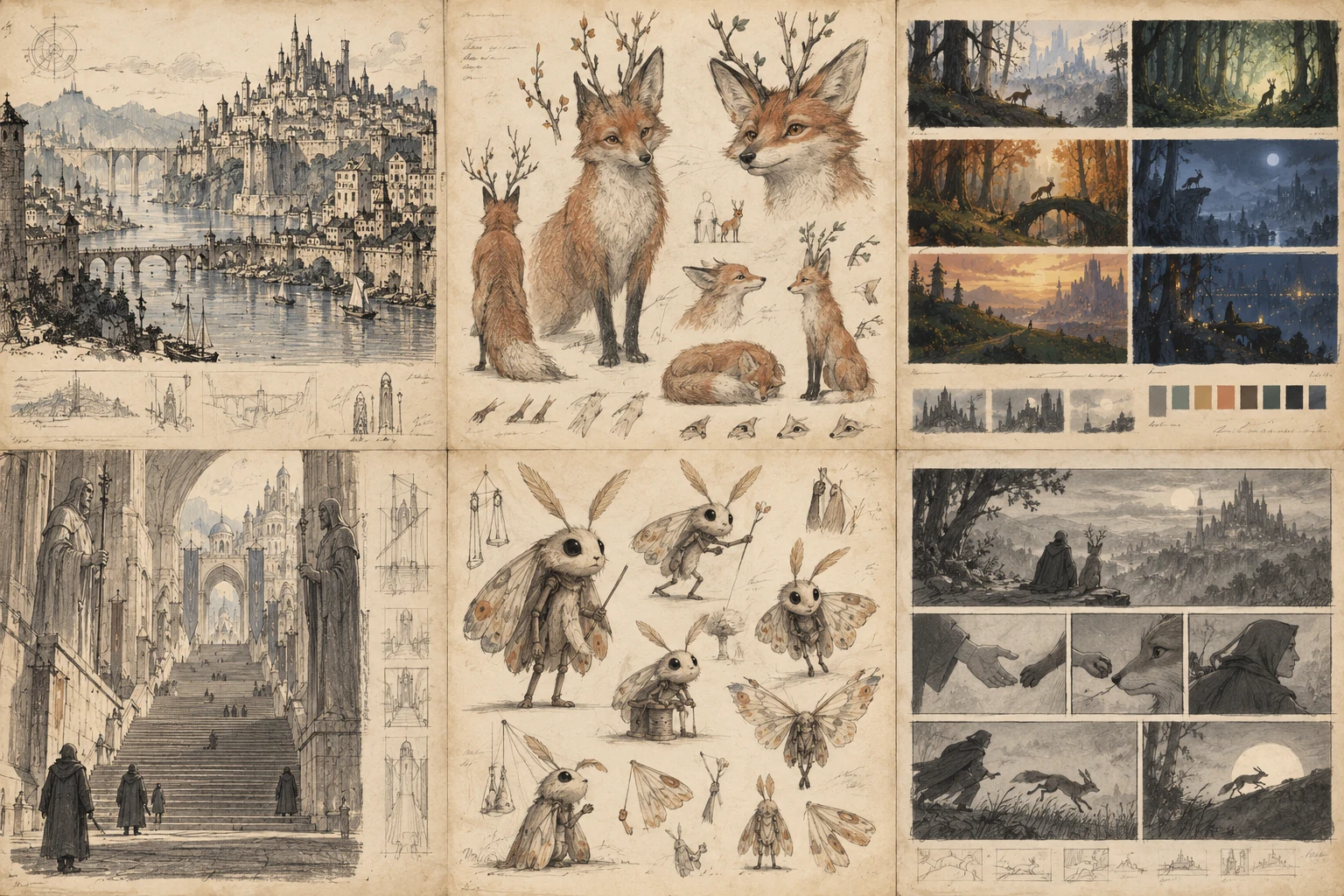
The first drawing is a proposal. The next drawing is a question about it.
Read it small
We begin at thumbnail scale, where detail cannot rescue an unclear idea. A strong grouping of values makes an image readable before the viewer knows what it contains. This early constraint is a useful way to protect the central visual thought.
Design a family of decisions
A world gains character through repeated choices. In Atlas of Elsewhere, curved branches, crooked roofs and interrupted circles recur across creatures and architecture. They are not identical shapes. They are related habits.
Keep the discarded route
An unused sketch still records an important decision. We keep selected alternatives beside the final direction, with a note about what changed. The archive becomes a conversation future collaborators can enter, instead of a collection of unexplained answers.